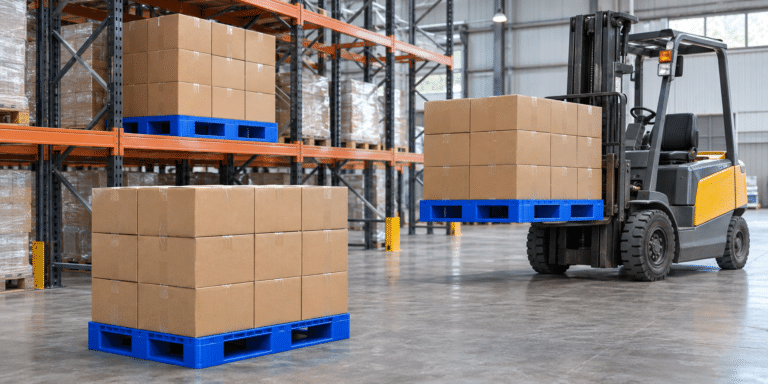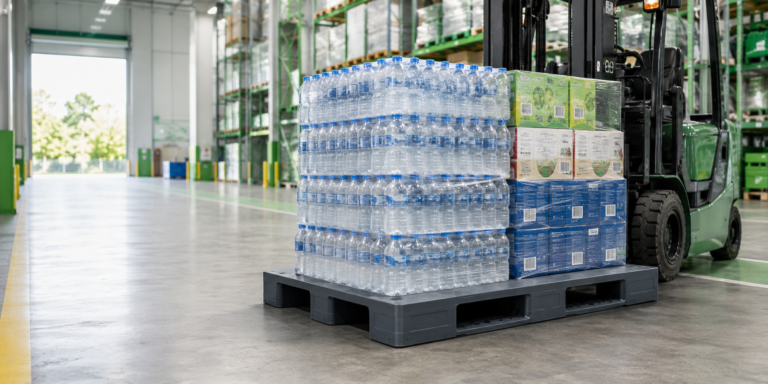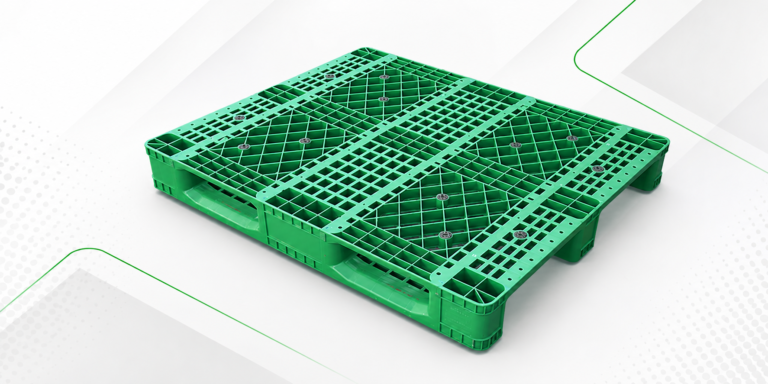

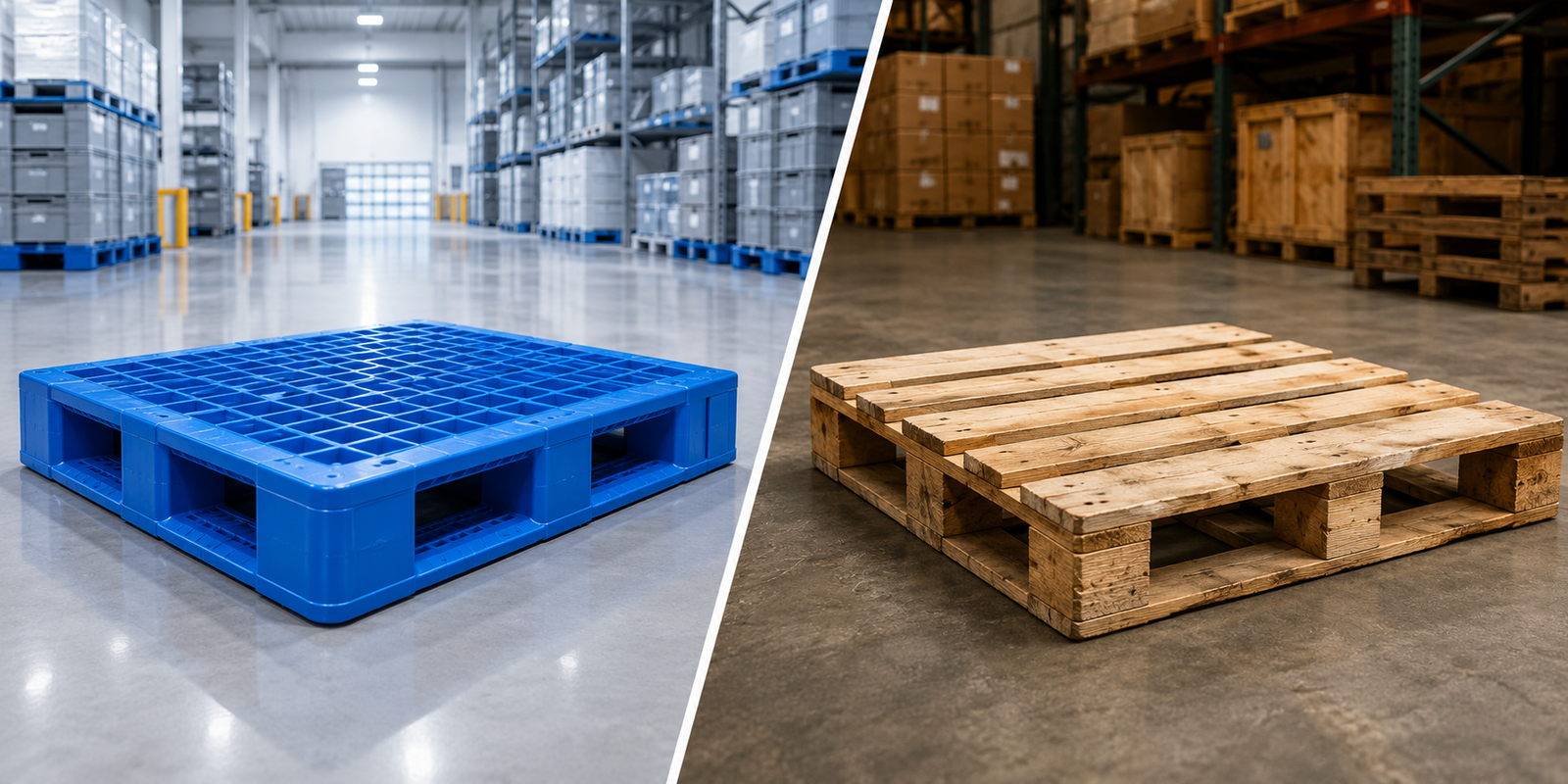
Choosing between plastic pallets and wood pallets involves more than comparing purchase prices. Buyers must also consider export requirements, moisture, cleanliness, load ratings, handling equipment and reuse. Wood can suit low-cost one-way shipments, but plastic pallets are often better for repeat exports and standardized handling.
Plastic Pallets vs Wood Pallets: Quick Comparison
| Factor | Plastic Pallets | Wood Pallets |
|---|---|---|
| Initial price | Usually higher | Usually lower |
| ISPM 15 treatment | Not required for the plastic pallet itself | Required for regulated raw-wood packaging on applicable routes |
| Moisture | Does not absorb water like raw wood | Can absorb moisture |
| Dimensions | Consistent molded construction | Can vary with wear and moisture |
| Cleaning | Smooth designs can be easier to wash | Porous surfaces may be harder to clean |
| Damage risks | No nails or splinters | Damaged boards and fasteners need inspection |
| Best fit | Export, repeat use and clean operations | Cost-sensitive one-way shipping |
Why Plastic Pallets Are Better for Many Export Shipments
1. No ISPM 15 Treatment for the Plastic Pallet
ISPM 15 regulates raw-wood packaging such as pallets, crates and dunnage. Where it applies, the wood must be treated and carry the recognized IPPC mark. A plastic pallet is not raw-wood packaging, so it does not require this treatment or mark.
Exporters must still check destination, carrier and customer rules. Raw-wood chocks, braces or crates elsewhere in the shipment may remain subject to ISPM 15.
2. Consistent Size and Structure
Molded plastic pallets provide consistent dimensions and weight, supporting forklifts, conveyors, automated systems and standardized packaging. Wood pallet condition can vary because of construction, repair, wear and moisture.
3. Moisture Resistance and Easier Cleaning
Plastic does not absorb water like raw wood. Suitable smooth or closed-deck pallets can be easier to wash and dry, which helps in food handling, pharmaceutical logistics and cold storage. Buyers must still confirm the resin, design, cleaning method and documentation.
4. No Nails, Splinters or Loose Boards
Plastic pallets contain no nails, splinters or loose boards, helping reduce related packaging damage. They can still be damaged by impact, overloading or poor forklift handling and should be inspected before reuse.
5. Better Potential for Reusable Logistics
Plastic pallets normally cost more initially, but that cost can be spread across repeated trips. Nestable export pallets may also reduce empty storage and return volume. Compare cost per trip—not only purchase price.
Load Ratings Still Matter
Material alone does not determine performance. Buyers must distinguish between:
- Static load: the pallet rests on a level supporting surface.
- Dynamic load: the pallet is moved with suitable handling equipment.
- Racking load: the pallet spans defined rack supports.
A high static rating does not make a pallet rackable. Confirm the model, cargo distribution, rack span, reinforcement and temperature. Smooth loads may also require anti-slip measures, stretch wrap or strapping.
When Can Wood Pallets Still Make Sense?
A compliant wood pallet may remain suitable when:
- the shipment is strictly one way;
- the lowest initial cost is the main priority;
- compliant treated pallets are readily available;
- the consignee accepts the selected wood pallet.
For repeated exports, moisture exposure, clean environments and standardized handling, plastic pallets usually provide the stronger overall solution.
Export Plastic Pallet Buyer Checklist
Before requesting a quote, provide:
- Destination and quantity
- Pallet dimensions
- Cargo type, weight and distribution
- Static, dynamic and racking requirements
- Forklift or pallet-jack entry
- Rack span, if applicable
- One-way or reusable use
- Temperature, color and anti-slip requirements
These details help the supplier recommend a suitable model rather than simply the cheapest pallet.
Frequently Asked Questions
Do plastic pallets need ISPM 15 treatment?
No. ISPM 15 applies to regulated raw-wood packaging. A plastic pallet itself does not need ISPM 15 heat treatment or an IPPC wood-packaging mark.
Are plastic pallets always better for export?
They are often better for repeat use, clean environments, moisture exposure and consistent handling. Wood may remain more economical for some one-way shipments.
Are all plastic pallets rackable?
No. Only use a model with a verified racking rating that matches the rack span, cargo distribution and operating conditions.
Choose the Right Export Pallet
Plastic pallets offer clear advantages for many export operations: no raw-wood treatment requirement for the pallet itself, consistent dimensions, moisture resistance, cleaner handling and strong reuse potential. The best model still depends on the load, handling equipment, destination and trip cycle.
Explore our plastic pallet range or request a quotation with your dimensions, load, quantity and destination.