
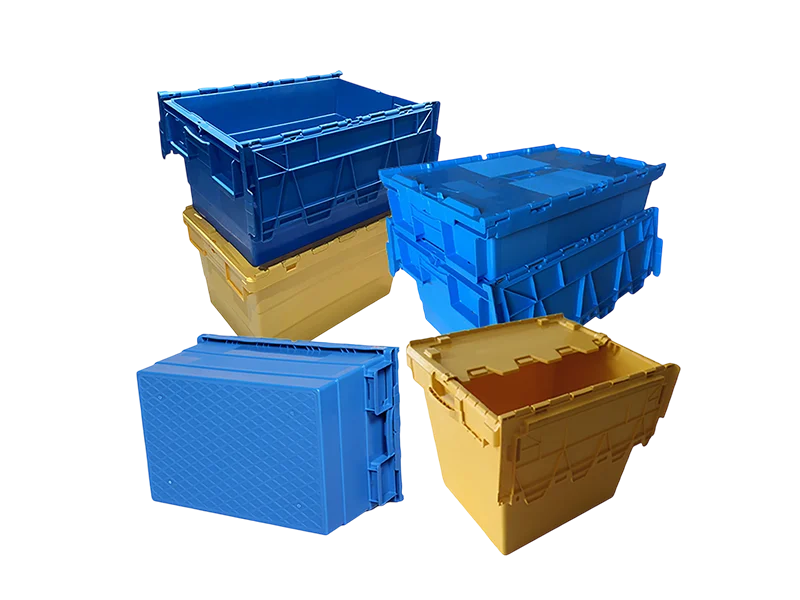
Showing 2 products
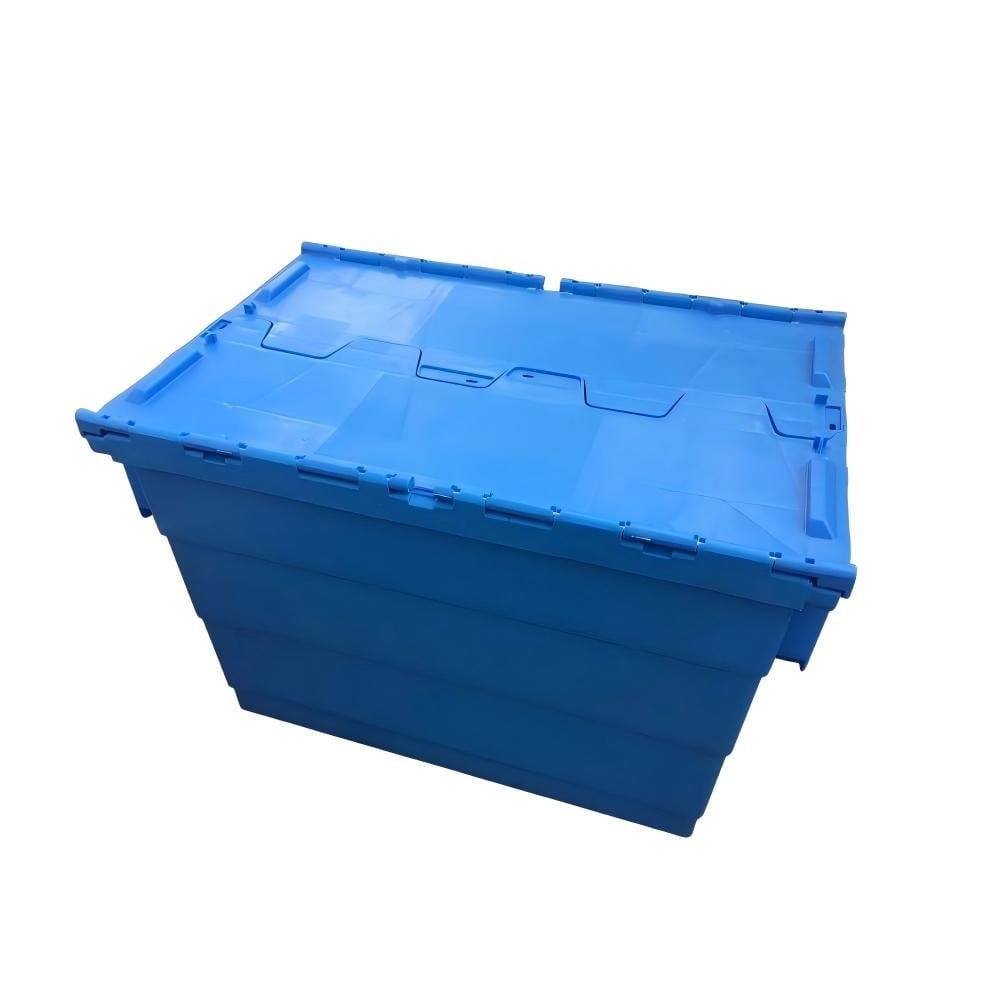 73.5 Liter
60 x 40 x 41.2 cm Stackable and Nestable Tote Box | Heavy Duty
- Application Areas:Agriculture Warehouse & Logistic
- External Dimensions:600 x 400 x 412 mm
- Internal Dimensions:N/A
- Capacity:73.5 Liter
- Ventilation Structure:Attached Lid Turnover Crate
- Material:PP
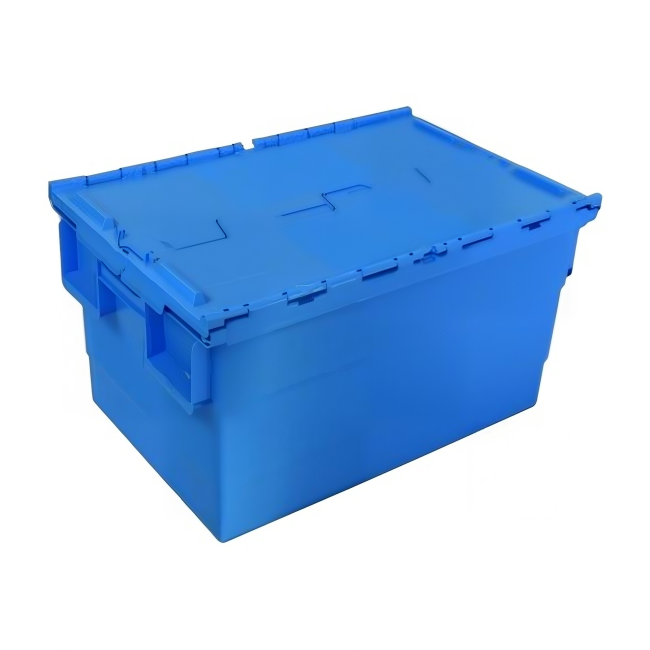 43 Liter
60 x 40 x 26 cm Nestable Plastic Container with Lid
- Application Areas:Storage
- External Dimensions:600 x 400 x 260 mm
- Internal Dimensions:524 x 341 x 219 mm
- Capacity:43 Liter
- Ventilation Structure:Nestable
- Material:HDPE
No products found
Try adjusting your filtersCustom Solutions
Custom Attached Lid Container Solutions
Match container dimensions, lid structure, nesting ratio, load capacity, color, and identification options to your warehouse and distribution process.
Applications
Where Attached Lid Containers Are Used
Attached lid containers protect goods during picking, transport, delivery, and return cycles. The closed tote structure helps reduce dust exposure, loose lids, and product loss.
Why Choose Us
Why Choose Us for Attached Lid Containers
We support distributors, logistics operators, retailers, and manufacturers with stable production, bulk supply, export packing, and practical model selection.
Selection Process
From Product Data to Attached Lid Tote Supply
A structured review connects tote dimensions, lid operation and nesting performance to the real distribution cycle.
Define the Contents
Share product dimensions, payload, quantity per tote and protection needs.
Match the Tote
Confirm internal size, lid clearance, material, label areas and security options.
Verify the Cycle
Check shelving, carts, conveyors, vehicles, loaded stacking and empty nesting.
Plan Supply
Coordinate samples, colors, markings, inspection, nested packing and delivery.
Buyer Guide
How to Select an Attached Lid Container
Compare product fit, lid clearance and the complete loaded and empty-return cycle—not only nominal capacity.
| Selection factor | What to confirm | Why it matters |
|---|---|---|
| Product fit | Internal length, width, height and usable lid clearance | External dimensions do not confirm usable capacity with the lids closed. |
| Lid design | Hinge movement, closure, tamper options and label areas | The lid affects security, handling speed and compatibility with the workflow. |
| Nesting | Empty nested height, stack quantity and return route | Nesting performance determines empty storage and reverse-logistics volume. |
| Stacking | Payload, loaded stack height, top load and support | Loaded stacking and empty nesting are different operating conditions. |
| Equipment | Shelves, carts, conveyors, vehicles and automation | External dimensions and base design must match every transfer point. |
Stacking note: Confirm the exact model's payload and loaded stacking conditions. Empty nested-stack data must not be used as a loaded stacking rating.
Frequently Asked Questions
Attached Lid Container FAQ
Concise answers for warehouse, retail, automotive, parcel distribution and procurement teams.
What is an attached lid container?
It is a reusable tote with hinged lids fixed to the container body, reducing loose-lid handling during storage, picking, transport and returns.
What are attached lid totes used for?
Common uses include warehouse picking, retail replenishment, parcel distribution, automotive parts, records, secure internal transport and closed-loop logistics.
How do attached lid containers save return space?
Many models nest when empty and stack when the lids are closed, reducing return volume while supporting loaded storage and transport.
Which dimensions should be checked?
Check internal dimensions for product fit, external dimensions for shelves and vehicles, lid clearance, nesting height and handling clearances.
What information is needed for a quote?
Provide the product, internal size, capacity, payload, stack height, nesting requirement, handling equipment, quantity, color, marking and destination.
Request an Attached Lid Container Quote
Send your required dimensions, capacity, quantity, load, and application details.