
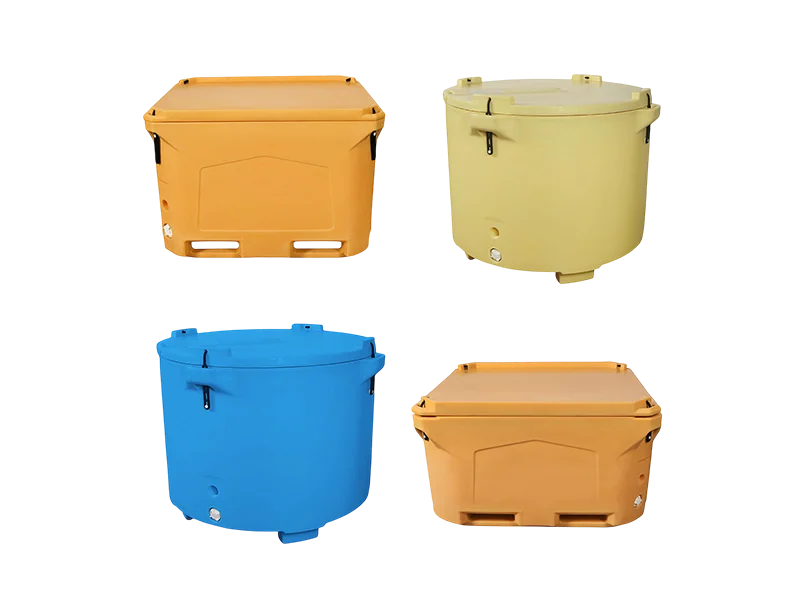
Showing 2 products
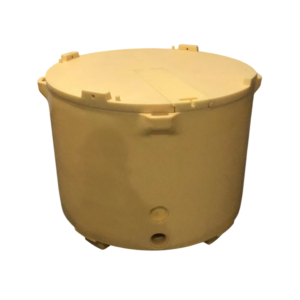
640L Insulated Round Box with Drain | 1150 × 890 mm
- External Dimensions:1150 x 890 mm
- Internal Dimensions:1050 x 730 mm
- Static Load:4000 kg
- Dynamic Load:1000 kg
- Volume:640 Liter
- Materials:HDPE
- Features:N/A
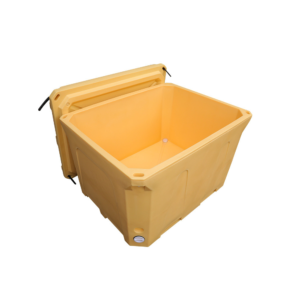
1473.2 x 1168.4 mm Insulated Container
- External Dimensions:1473.2 x 1168.4 x 939.8 mm
- Internal Dimensions:1397 x 1117.6 x 762 mm
- Static Load:4000 kg
- Dynamic Load:1000 kg
- Volume:961.5 Liter
- Materials:HDPE, PP
- Features:Three Runner
Custom Insulated Container Solutions
Match internal volume, insulation, sealing, payload, hygiene features and accessories to the product, route duration and target temperature range.
Internal Volume and Access
Match usable dimensions, lid or door access and loading method to the product and warehouse workflow.
Insulation and Sealing
Compare wall construction, lid fit, seals and closure details around the route and ambient exposure.
Payload and Handling
Confirm product weight, forklift entry, stacking and any coolant or refrigeration interface requirements.
Hygiene and Tracking
Drainage, smooth surfaces, labels, numbering and tracking areas can support cleaning and asset control.
Insulated Container Uses Across Cold-Chain Logistics
Insulated pallet containers support food, chilled ingredients and other temperature-sensitive products where controlled handling time and reduced heat transfer matter.
Chilled Food Ingredients
Insulated bulk containers can slow temperature change during suitable food-processing and warehouse transfers.
Meat and Seafood
Washable, moisture-resistant designs support suitable wet and chilled handling when sanitation needs are confirmed.
Cold-Chain Distribution
Insulation helps buffer loads during staging, loading and transport between temperature-controlled facilities.
Temperature-Sensitive Goods
Route-qualified configurations can support other sensitive goods when the required range and duration are documented.
Why Choose Us
As a B2B insulated container manufacturer, we focus on consistent construction, practical temperature-control requirements and reliable supply for cold-chain projects.
Request a QuoteFrom Temperature Requirements to Container Selection
Define the product, target range and route before comparing insulation, volume, payload and accessories.
Define the Product
Share product type, starting temperature, payload, hygiene needs and sensitivity.
Map the Route
Confirm target range, ambient extremes, duration, door openings and transfer points.
Match the System
Review insulation, sealing, internal volume, coolant method, handling and stacking.
Validate Performance
Coordinate samples, route testing, cleaning review, inspection and delivery planning.
How to Select an Insulated Pallet Container
Insulation alone does not guarantee a temperature range; selection must consider the complete route and thermal system.
| Selection factor | What to confirm | Why it matters |
|---|---|---|
| Temperature | Target range, starting temperature and ambient extremes | The temperature difference influences insulation and coolant requirements. |
| Duration | Route time, staging, door openings and delay allowance | Longer or interrupted routes increase heat-transfer exposure. |
| Thermal system | Passive insulation, coolant packs or active refrigeration | An insulated box slows heat transfer but does not generate cooling. |
| Capacity | Usable volume, payload, airflow space and load arrangement | Product layout affects both logistics capacity and temperature distribution. |
| Hygiene | Cleaning process, drainage, seals and material suitability | Sanitation and moisture control affect safe reuse and service life. |
Qualification note: Validate the complete container, coolant or refrigeration method, loading pattern and route. Temperature performance cannot be guaranteed from insulation thickness alone.
Insulated Pallet Container FAQ
Concise answers for food, cold-chain, warehouse and temperature-sensitive logistics teams.
What is an insulated pallet container?
It is a reusable bulk container with insulated walls designed to slow heat transfer during the storage and transport of temperature-sensitive goods.
Does an insulated container actively cool the load?
Insulation slows temperature change but does not create cooling by itself. Active refrigeration or qualified coolant systems may be required for the route.
What temperature information should I provide?
Provide the target range, starting product temperature, ambient extremes, route duration, door-opening frequency and any coolant or refrigeration method.
Which hygiene details should be checked?
Confirm internal surfaces, drainage, sealing, cleaning chemicals, wash temperature and whether the material is suitable for the intended product contact conditions.
What information is needed for a factory quote?
Provide the product, temperature range, route duration, internal volume, payload, stacking, handling equipment, accessories, quantity and destination.
Request a Custom Quote
Tell us about your requirements and our team will get back to you within 24 hours.