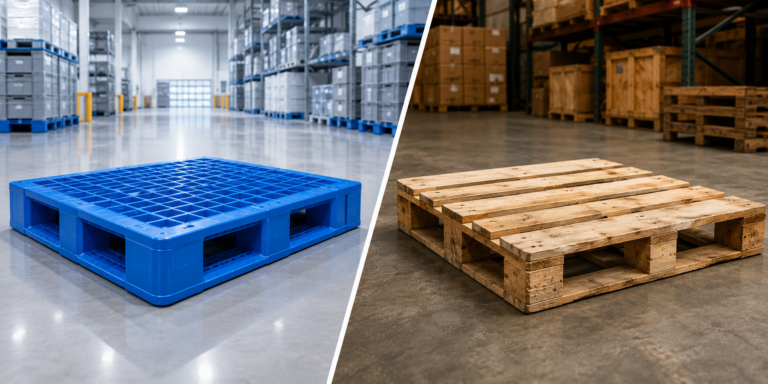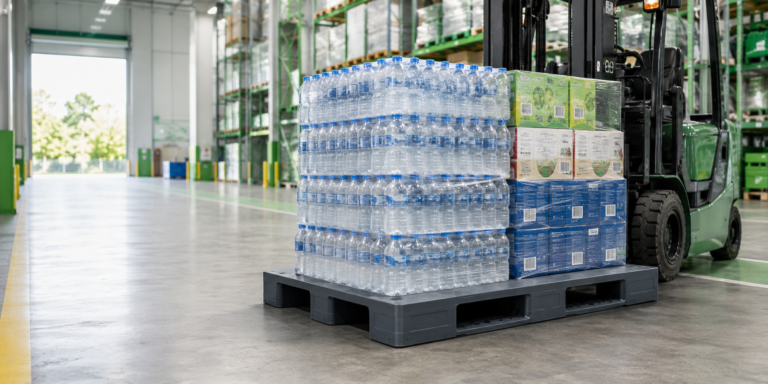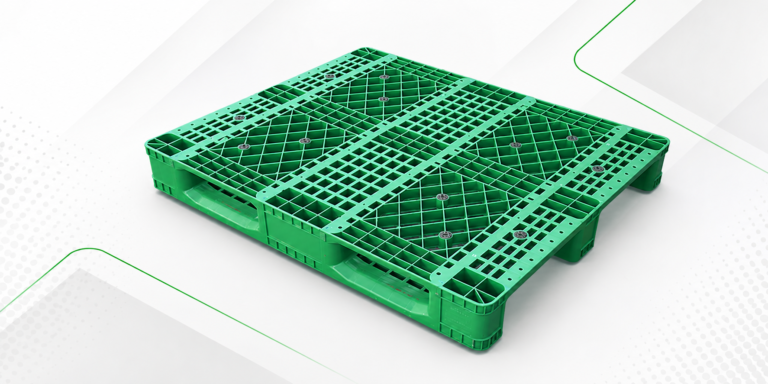

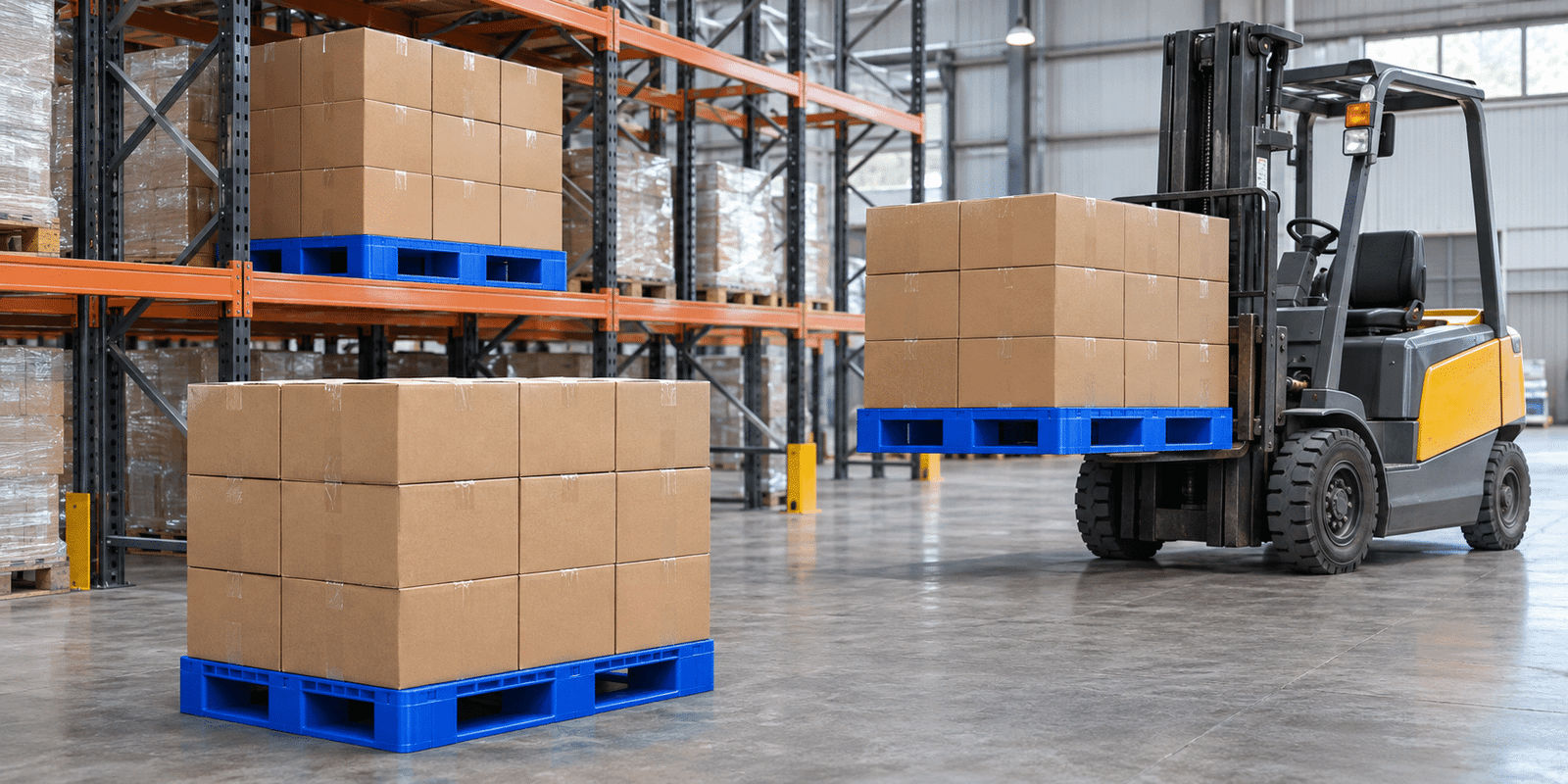
A plastic pallet can carry different weights depending on how it is supported. Floor storage, forklift handling and warehouse racking are different working conditions, so buyers should compare static, dynamic and racking load ratings before choosing a model.
Plastic Pallet Load Ratings at a Glance
| Load Rating | Typical Condition | What Buyers Should Confirm |
|---|---|---|
| Static load | Pallet rests on a flat, fully supporting surface | Floor condition, stacking plan and load distribution |
| Dynamic load | Loaded pallet is lifted and moved | Forklift or pallet-jack entry, travel conditions and load stability |
| Racking load | Pallet spans rack beams or defined supports | Rack span, support direction, reinforcement and deflection |
What Is Static Load Capacity?
Static load refers to a pallet carrying goods while resting on a level surface that supports it from below. Because the deck is fully supported, this rating is commonly higher than the dynamic or racking rating.
Static capacity is relevant for floor storage and some stacking applications, but it should not be used as a forklift or rack capacity. Also check whether the lower load is stable and whether the stacked unit loads can safely carry the weight above them.
What Is Dynamic Load Capacity?
Dynamic load refers to a loaded pallet being lifted and moved. Bending, vibration, braking and impact during movement mean this rating is usually lower than static capacity.
Tell the supplier whether you use forklifts, pallet trucks, conveyors or automation. Fork entry, tine spacing, deck design and load distribution can affect performance.
What Is Racking Load Capacity?
Racking load is the supported weight of a pallet placed across defined rack beams or rails. Unlike floor storage, part of the pallet is unsupported. The deck and runners must resist bending across the open span.
A high static rating does not mean that a pallet is rackable. Ask for the load rating at your actual rack span and confirm the direction in which the pallet sits on the beams. For heavier loads or wider spans, a rackable plastic pallet may use steel reinforcement, a stronger runner design or both.
Why One Capacity Figure Is Not Enough
Published values are linked to defined test conditions. ISO 8611 provides test methods for new flat pallets and notes that load-capacity tests do not replace field trials for a specific design.
Before approving a model, review these factors:
- Load distribution: cartons behave differently from drums, bags or concentrated machine parts.
- Rack layout: beam spacing and support direction change pallet bending.
- Temperature: cold or heat may change material behavior and allowable load.
- Handling: forklifts, pallet jacks and conveyors apply different forces.
- Load security: unstable goods can shift even when the pallet is within its rating.
- Condition: impact damage or distortion can make a reusable pallet unsuitable.
Do You Need a Reinforced Plastic Pallet?
Not every project needs reinforcement. Nestable pallets can suit one-way export and lighter handling, while three-runner or reinforced models may suit repeat warehouse use and racking. Steel bars can improve stiffness but add weight and cost, so base the decision on the load and rack span.
Plastic Pallet Buyer Checklist
Send the following information when requesting a recommendation or quotation:
- Required pallet dimensions and quantity
- Product type, total weight and weight distribution
- Floor storage, stacking, transport or racking use
- Rack beam span and support direction
- Forklift, pallet-jack, conveyor or automation details
- Operating temperature and reuse cycle
- Anti-slip, edge or identification requirements
This information allows a supplier to match the pallet to the real application instead of recommending a model from weight alone.
Frequently Asked Questions
Does a high static load mean a pallet is rackable?
No. Static load assumes broad support beneath the pallet. Racking leaves an open span between supports, creating a different bending condition. Use only a pallet with a suitable racking rating for your layout.
Can the same pallet have different racking capacities?
Yes. Capacity can change with rack span, support direction, reinforcement, temperature and load distribution. Ask for the conditions behind any published figure.
Choose a Plastic Pallet for the Actual Job
The correct plastic pallet load capacity is not one large number. It is the verified rating for the way the pallet will be supported and handled. Define the cargo, equipment, environment and rack layout first; then compare suitable designs.
Explore our plastic pallet range or request a quotation with your pallet size, load weight, handling method and rack span.