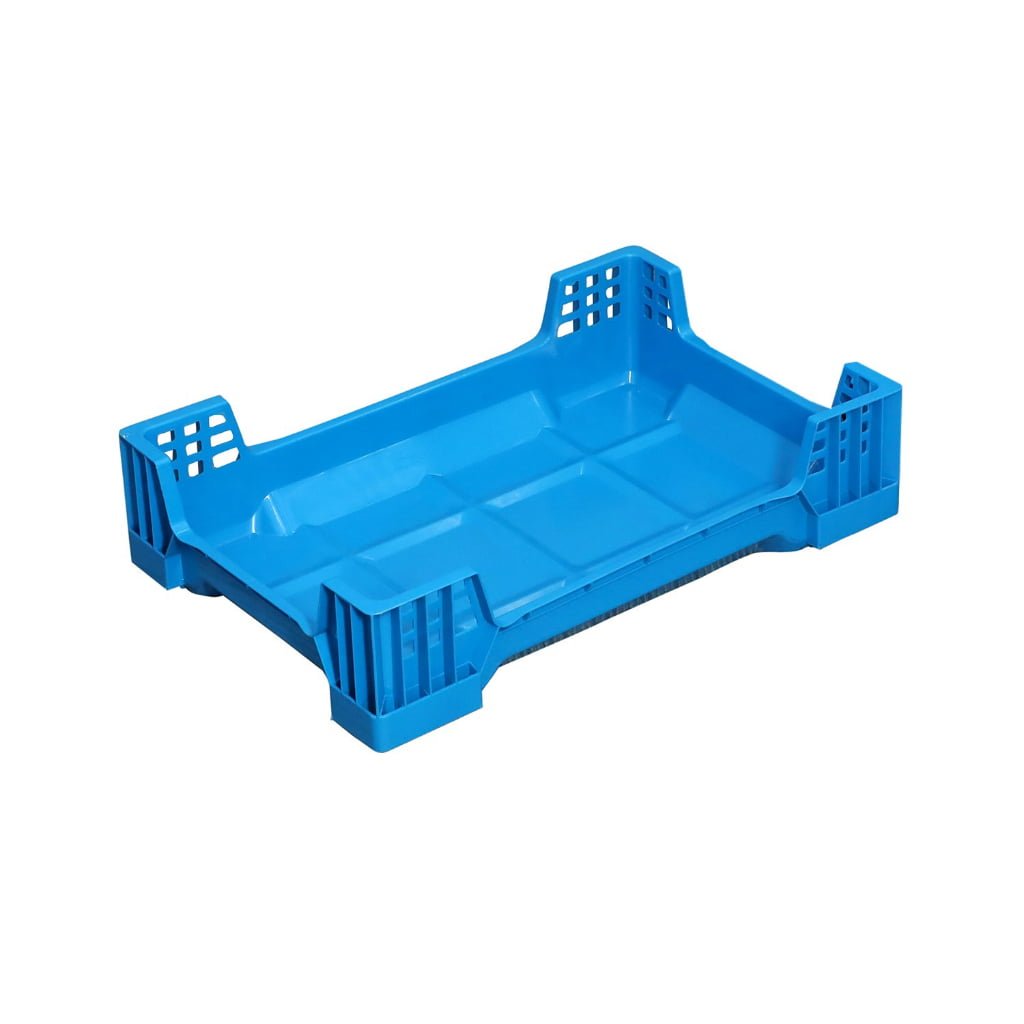
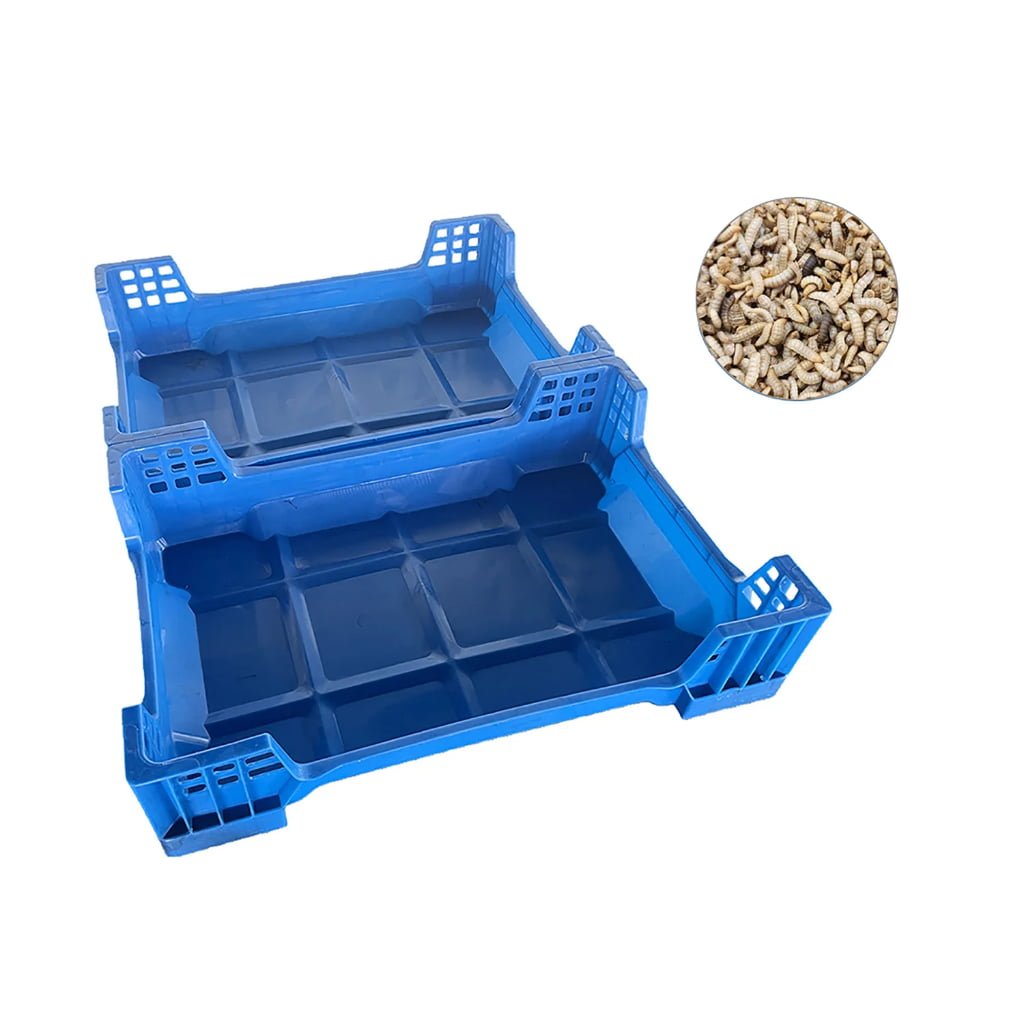
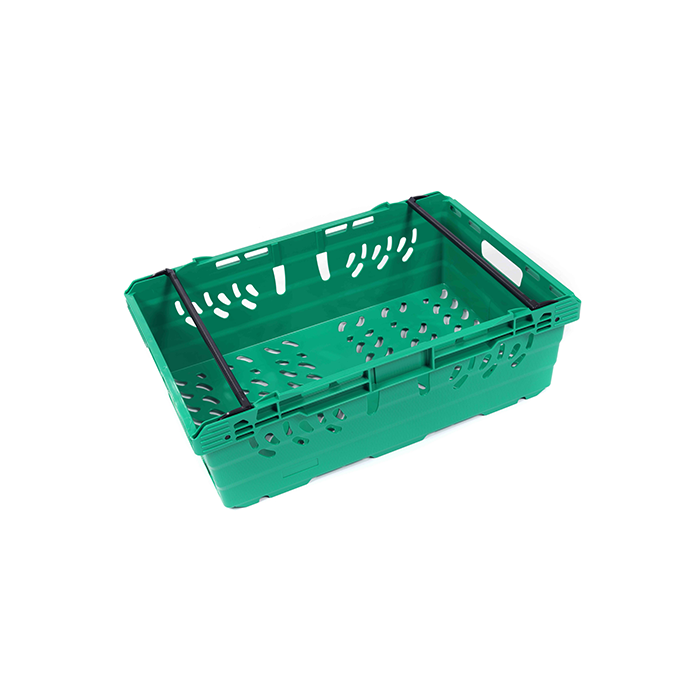
600 × 400 × 190 mm Heavy-Duty Mealworm Breeding Box
- External Dimensions:600 × 400 × 190 mm
- Internal Dimensions:565 x 369 x 100 mm
- Capacity:N/A
- Ventilation Structure:N/A
- Material:100% virgin HDPE or PP

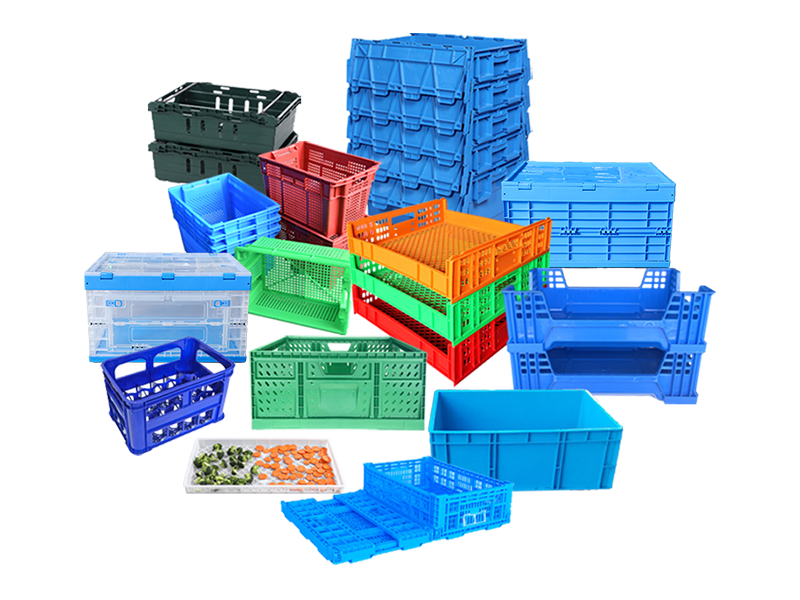
Showing 10 products
No products found
Try adjusting your filtersCrate Configuration
Choose the crate from the product, usable dimensions, load, storage system and handling equipment. This prevents poor fit, unstable stacking and unnecessary empty-storage volume.
Match external dimensions to shelves and conveyors, then verify internal dimensions and usable volume for the product.
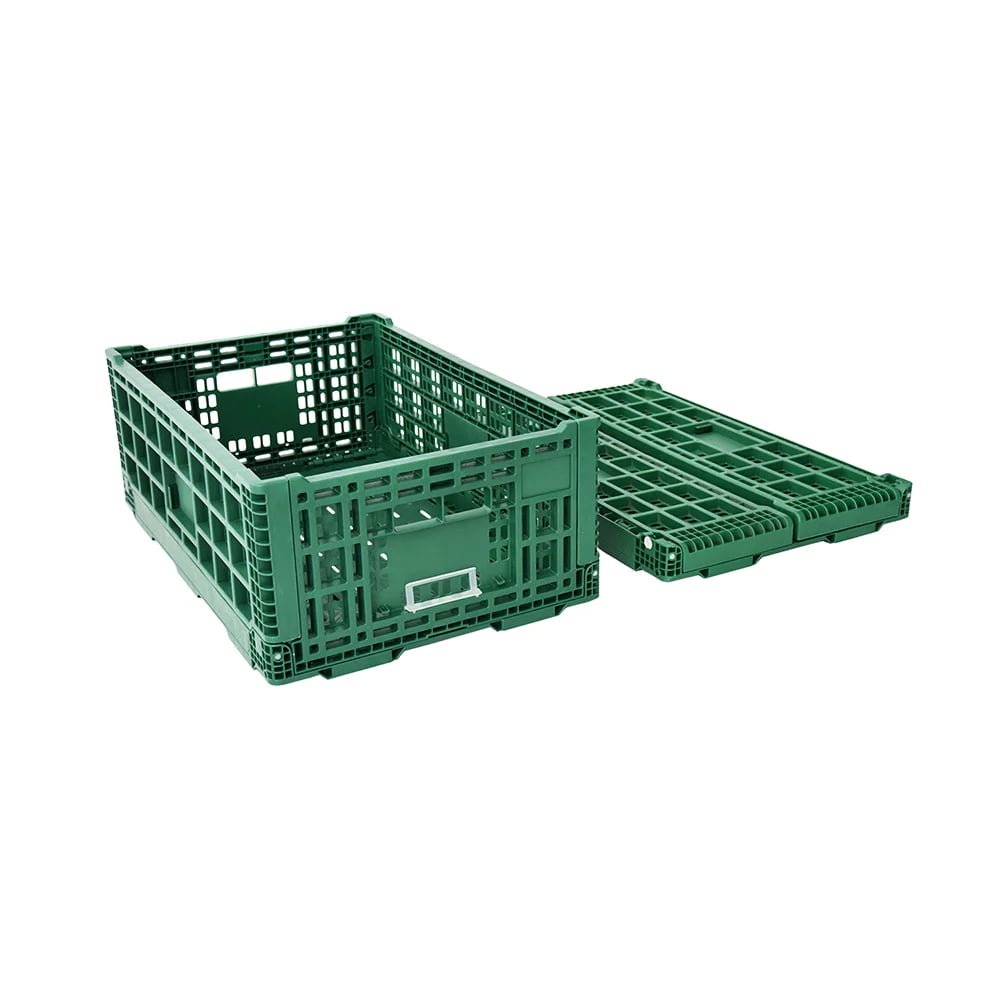
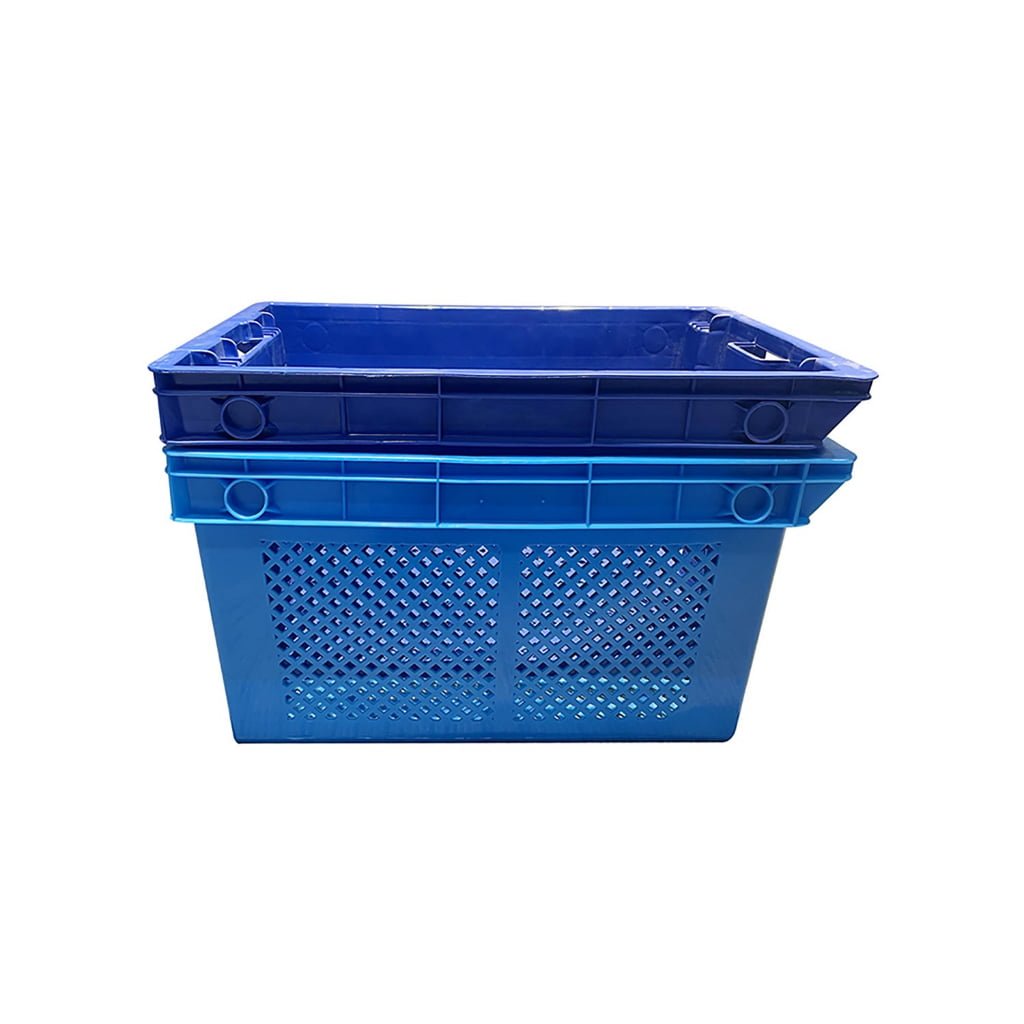
Compare stackable, nestable, collapsible, ventilated and solid-wall structures around the logistics cycle.
Select material, ribbing, corners and base construction around payload, impact, temperature and cleaning.
Add color, logos, labels, barcodes or numbering to support warehouse ownership and tracking.
Applications
Reusable plastic crates support operations that need repeat handling, stable stacking, easy identification and washable surfaces.
Stackable crates organize parts and orders through shelving, carts, conveyors and dispatch areas.
Ventilated designs support airflow, drainage and reusable produce handling.
Solid or partitioned crates protect components during storage and factory circulation.
Suitable washable models support chilled storage, bakery, meat and retail replenishment workflows.
Selection Process
A structured review connects the crate specifications to real storage, handling and return conditions.
Share product dimensions, weight, quantity per crate and protection needs.
Compare internal size, walls, ventilation, folding or nesting and accessories.
Confirm shelves, carts, pallets, conveyors, stacking height and cleaning.
Coordinate samples, markings, inspection, nested packing and delivery.
Buyer Guide
Compare usable dimensions and the complete logistics cycle—not only nominal capacity or purchase price.
| Selection factor | What to confirm | Why it matters |
|---|---|---|
| Product fit | Internal length, width, height and usable capacity | External dimensions describe storage fit but do not confirm usable product space. |
| Structure | Stackable, nestable, collapsible, vented or solid walls | The structure changes loaded stability, airflow and empty-storage efficiency. |
| Load | Payload, load distribution, stack height and support | Crate weight alone does not indicate safe payload or stacking performance. |
| Equipment | Shelves, carts, conveyors, pallets and automated handling | Base geometry and dimensions must match every transfer point. |
| Environment | Temperature, hygiene, washing, impact and chemicals | Material and wall design affect durability and service life. |
Stacking note: Confirm the exact model's payload and loaded stacking conditions. Do not assume a crate is safe to stack from its empty nesting or storage configuration.
Frequently Asked Questions
Concise answers for warehouse, agriculture, food distribution, manufacturing and procurement teams.
Plastic crates are reusable handling containers used for warehouse picking, produce, food distribution, industrial components, retail replenishment and internal logistics.
Choose stackable crates for loaded stability, nestable crates for empty storage efficiency, or collapsible crates when reducing empty-return volume is important.
Ventilated walls suit goods that benefit from airflow, cooling, washing or drainage, while solid walls provide better containment for small or loose items.
Check external dimensions for shelves and conveyors, internal dimensions for product fit, and the usable height, stacking condition and handling clearances.
Provide the product, internal size, capacity, payload, structure, ventilation, handling equipment, quantity, color, marking and destination.
Send your size, capacity, quantity, and application requirements.