
In today’s fast-moving supply chain, pallets need to do far more than hold products. They must protect inventory, support efficient handling, improve workplace safety, and perform reliably from the warehouse to the final destination.
For businesses that ship beverages, food, chemicals, pharmaceuticals, consumer goods, or industrial materials, plastic pallets offer a stronger, cleaner, and more consistent alternative to traditional wood pallets.
High Load Capacity for Heavy Products
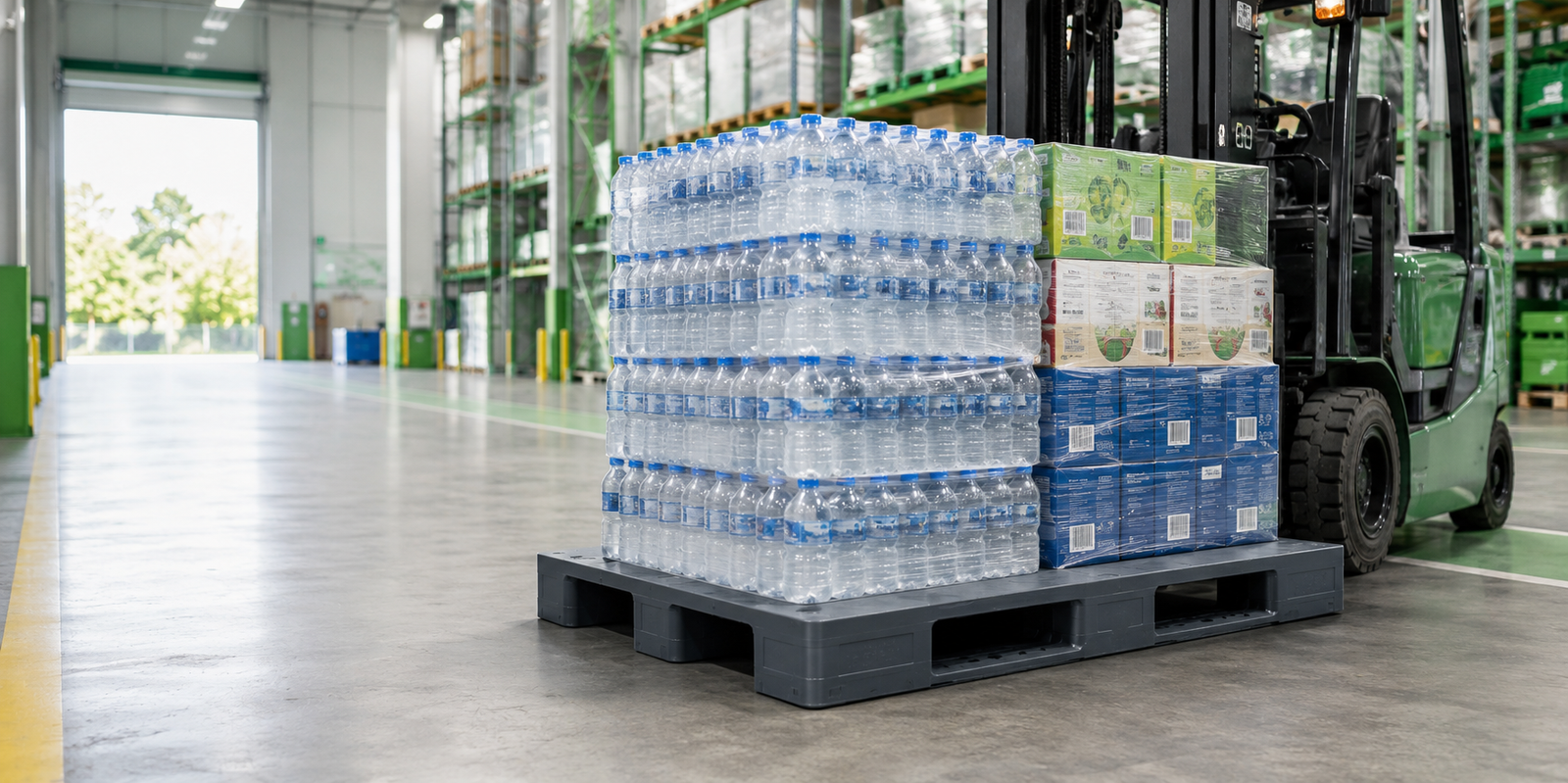
Heavy products require a pallet that remains stable during storage, forklift handling, transportation, and rack loading. Plastic pallets are designed to provide dependable support for demanding applications and repeated use.
Whether you are moving bottled water, canned food, household cleaners, bagged materials, or dense retail products, a durable plastic pallet helps reduce the risk of pallet failure and load instability.
This is especially important when products are in motion. A pallet may appear safe while sitting on the floor, but transportation, forklift turns, conveyor movement, and rack placement can place additional pressure on the pallet structure. Plastic pallets provide a reliable platform for these dynamic conditions.
Consistent Dimensions Improve Warehouse Efficiency
One of the key advantages of plastic pallets is consistency. They are manufactured with uniform dimensions, shape, and weight distribution, helping create a more predictable handling experience throughout the supply chain.
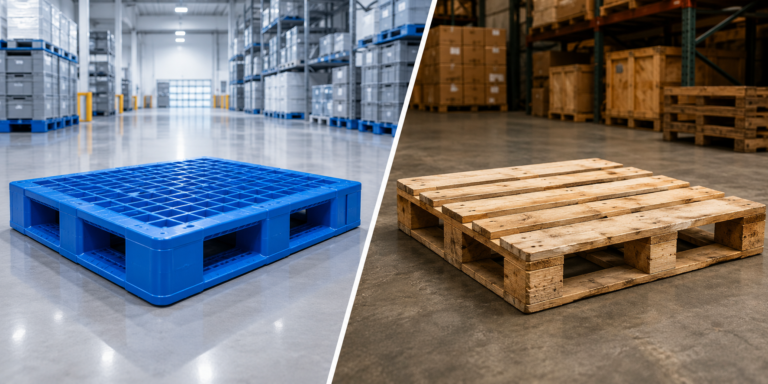
Unlike wood pallets, which can vary in board spacing, moisture content, condition, and overall size, plastic pallets provide the same reliable structure every time. This makes them easier to stack, store, load, and transport.
Consistent pallet dimensions can help businesses improve forklift handling, maximize warehouse space, reduce unstable loads, and standardize logistics operations. For facilities that handle a large volume of products every day, this consistency can lead to meaningful improvements in efficiency.
Ideal for Automated Warehouses
Modern warehouses increasingly rely on automation. Conveyor systems, robotic palletizers, automated forklifts, and automated storage and retrieval systems all require pallets that move consistently and reliably.
Plastic pallets are well suited to automated environments because they offer a stable, repeatable platform. Their uniform construction supports smoother movement through automated systems and helps reduce the risk of interruptions caused by damaged boards, loose nails, or wood debris.
Wood pallets can create problems for automation when boards crack, nails become exposed, or splinters interfere with conveyors and machinery. Plastic pallets help eliminate many of these risks, supporting greater uptime and lower maintenance requirements.
For companies investing in warehouse automation, choosing the right pallet is an essential part of protecting that investment.
Cleaner and More Hygienic
Hygiene is a major concern for food, beverage, pharmaceutical, cosmetic, and consumer-goods supply chains. Plastic pallets are non-porous, moisture-resistant, and easy to clean, making them an excellent choice for operations with high sanitation standards.
Unlike wood, plastic does not absorb liquids, odors, or contaminants as easily. It also does not produce splinters, loose boards, or wood dust that can affect product cleanliness and workplace conditions.
Plastic pallets are especially valuable for businesses handling packaged food, fresh produce, beverages, pharmaceutical products, personal-care goods, and household chemicals. Their smooth surface supports a cleaner supply chain and helps companies maintain better handling standards from production to delivery.
A Safer Choice for Workers and Products
A broken pallet can create safety hazards for employees and products alike. Loose nails, cracked boards, splinters, and unstable loads can result in injuries, damaged inventory, equipment problems, and unexpected manual labor.
Plastic pallets help create a safer handling environment. Their durable, integrated construction reduces the risk of sharp debris and weak boards, while their consistent dimensions improve load stability during forklift and warehouse operations.
By using plastic pallets, companies can help reduce product damage, improve worker safety, protect material-handling equipment, and avoid the costly disruption of restacking a damaged load.
Built for Reuse and Long-Term Value
Plastic pallets are designed for repeated use. Their long service life can help businesses reduce the frequency of pallet replacement and minimize the operational disruptions caused by broken or damaged pallets.
While the initial purchase cost may be higher than a standard wood pallet, plastic pallets can deliver stronger long-term value. Their durability, cleanliness, consistency, and reduced maintenance needs can help lower the total cost of ownership.
Potential savings may come from fewer product losses, less manual restacking, reduced equipment damage, lower cleanup costs, fewer shipment delays, and less frequent pallet replacement.
For businesses focused on operational efficiency, plastic pallets are not simply a shipping tool. They are a long-term logistics investment.
The Smarter Foundation for Your Supply Chain
Plastic pallets provide the strength, reliability, hygiene, and consistency that modern supply chains require. They support heavy loads, work efficiently with automated systems, improve workplace safety, and offer a cleaner platform for sensitive products.
From the warehouse floor to the delivery truck, plastic pallets help businesses move products with greater confidence.
If your business is looking to reduce damage, improve efficiency, and build a stronger supply chain, plastic pallets are the smarter choice.