
What Is a Collapsible IBC Container?
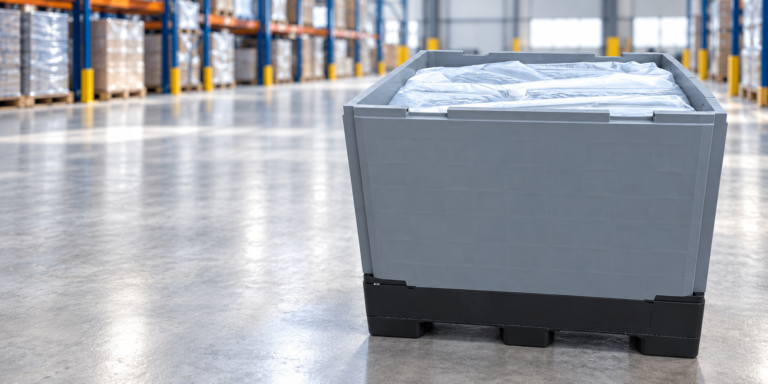
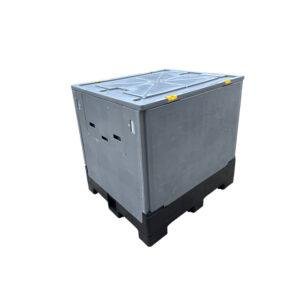
A collapsible IBC container is a reusable bulk container designed for storing and transporting liquids. It combines a rigid outer box with a flexible liquid liner, giving the contents support and protection without allowing the liquid to come into direct contact with the container walls.
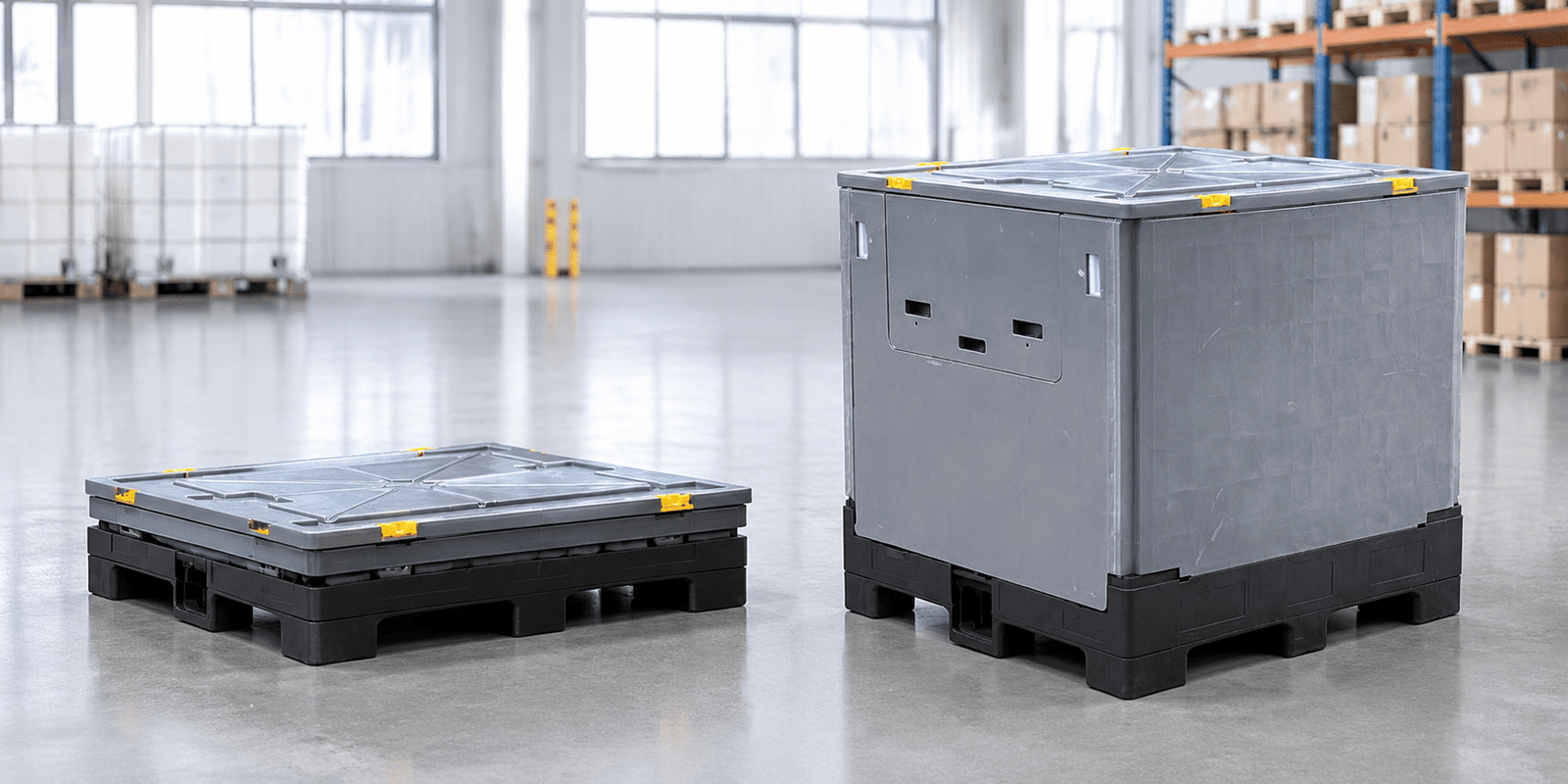
When the container is empty, its side panels fold down onto the pallet base. This reduces its height from 1,130 mm to just 330 mm, so empty units take up much less space during return transport and warehouse storage.
You may also see this product described as a collapsible liquid IBC, foldable IBC container, reusable liquid IBC or bag-in-box IBC. These names usually refer to the same basic system: a reusable outer container paired with a replaceable liner bag.
How Does a Collapsible IBC Work?
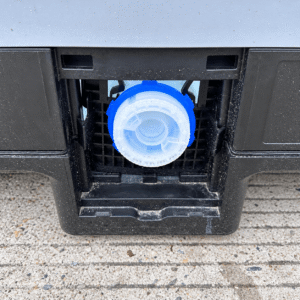
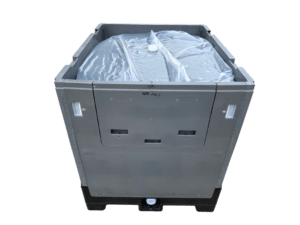
Before filling, a liquid liner is placed inside the unfolded container. The liner is connected to the required inlet and outlet fittings, and the container lid is then closed and locked.
The liquid stays inside the liner rather than touching the reusable HDPE outer box. Once the product has been discharged, the liner can be removed according to the handling requirements of the application. The outer container can then be cleaned if necessary, folded and returned for another filling cycle.
This setup is especially useful for closed-loop transport, repeated deliveries between facilities and supply chains where empty containers need to be returned to the filling location.
What Liquids Can It Hold?
A collapsible IBC can be configured for a wide range of liquids, including:
- Fruit juice and beverage ingredients
- Milk and other liquid food ingredients
- Edible oils and syrups
- Cosmetic liquids and personal care ingredients
- Industrial oils and lubricants
- Detergents and cleaning liquids
- Selected chemical liquids
That does not mean one liner is suitable for every liquid. The liner material, fittings and seals must be checked against the product being filled. Temperature, viscosity, chemical composition, filling method and discharge method can all affect compatibility.
Before ordering, tell the supplier exactly what liquid you plan to handle. This makes it easier to choose the right liner and connection system instead of relying on capacity alone.
Why Is a Liquid Liner Needed?
The liner acts as the liquid-holding part of the system. It helps protect the contents while keeping the reusable outer container separate from the liquid.
Liquid liners may be made from synthetic resin materials such as polyethylene (PE) and polypropylene (PP). Depending on the application, other materials such as PVC, PET or PLA may also be considered. Inlet and outlet components can be configured in materials such as PP to match the filling and discharge setup.
The correct liner should be selected according to the liquid, required barrier performance, filling temperature and fitting design. Food, cosmetic and chemical applications may have different material and documentation requirements, so liner compatibility should always be confirmed before use.
What Happens After the IBC Is Emptied?
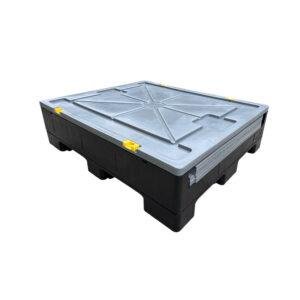
After discharge, the liner is removed and the container walls are folded onto the pallet base. The lid fits over the folded structure, creating a compact unit for storage or return transport.
The assembled external size of this 1,000L model is 1,200 × 1,000 × 1,130 mm. When folded, its size is reduced to 1,200 × 1,000 × 330 mm.
This means several folded containers can use the vertical space normally required by one assembled unit. For companies running regular delivery routes, that can reduce empty-return volume and make warehouse organization easier.
Key Specifications of the 1,000L Collapsible IBC
- Capacity: 1,000 liters
- External dimensions: 1,200 × 1,000 × 1,130 mm
- Internal dimensions: 1,120 × 920 × 975 mm
- Folded dimensions: 1,200 × 1,000 × 330 mm
- Container material: HDPE
- Container weight: 84 kg
- Dynamic load rating: 3,000 kg
- Static load rating: 7,500 kg
- Forklift entry: Four-way entry
- Customization: Available
Under the specified handling conditions, filled containers can be stacked two high while being moved and up to five high in static storage. Actual stacking must follow the supplier’s instructions and take account of the liquid weight, floor condition, handling equipment and operating environment.
Built for Repeated Handling
The rigid HDPE walls support the liner during filling, storage and transport. A pallet-style base allows forklifts to enter from all four sides, which gives warehouse teams more flexibility when loading containers or moving them between production areas.
The lid includes locking points that hold it closed after assembly. This helps keep the container structure secure during normal handling. The box can be reused for as long as it remains undamaged and suitable for service, while the liner can be replaced according to the requirements of each filling cycle.
Collapsible IBC vs. Rigid IBC
A standard rigid IBC keeps the same shape whether it is full or empty. It is simple to handle, but empty units still occupy their full transport volume.
A collapsible IBC is different because its walls fold after unloading. This makes it a practical option when empty containers need to be stored or returned regularly. The outer box is reused, while the liquid is held in a separate liner.
The better choice depends on the route. If the container stays at one location, a rigid IBC may be suitable. If it moves repeatedly between a supplier and a customer, a collapsible system can make the return trip more space-efficient.
What Should You Check Before Ordering?
Start with the liquid, not just the container size. Share the following details with the supplier:
- The name and composition of the liquid
- Filling and discharge temperatures
- Liquid viscosity
- Required inlet and outlet sizes
- Filling and discharge equipment
- Required liner material
- Transport and stacking conditions
- Any documentation or compliance requirements
- Order quantity and destination country
Enlightening Plast can customize the container, liner arrangement and connection options around the intended application. Providing complete project details at the beginning makes it easier to recommend a workable configuration and prepare an accurate quotation.
Frequently Asked Questions
Is a collapsible IBC the same as a bag-in-box IBC?
In many industrial applications, the terms describe a similar system: a rigid, reusable outer container with a flexible liner holding the liquid inside.
Can the container be used without a liner?
This model is designed to work with a liquid liner. The liner holds the product and prevents direct contact between the liquid and the outer HDPE container.
Can one liner be used for every liquid?
No. Liner materials and fittings must be selected according to the liquid, temperature, viscosity and filling process. Chemical compatibility should be checked before use.
How much space does it save when folded?
The container height drops from 1,130 mm when assembled to 330 mm when folded. This makes empty storage and return transport much more compact.
Can a filled collapsible IBC be stacked?
Yes. For this model, filled units can be stacked two high under specified dynamic handling conditions and up to five high in static storage. Always follow the confirmed load and stacking instructions for the project.
Can the container be customized?
Yes. Custom options can be discussed for the outer container, liner system, inlet and outlet fittings, identification and other project requirements.
Need a 1,000L Collapsible IBC for Your Liquid?
Tell Enlightening Plast what liquid you need to store, how it will be filled and discharged, the required quantity and the destination country. Our team can help you review the container, liner and fitting options for your application.