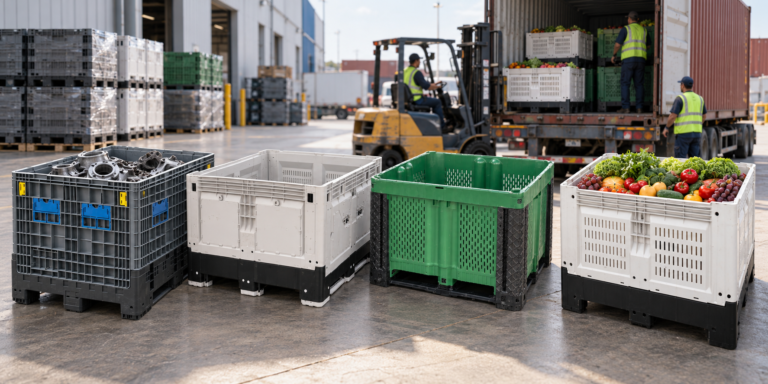

Choosing the right pallet box is not only about size or price. For procurement teams, the real question is whether the container can match the way products are stored, handled, stacked, transported, cleaned, and reused in daily operations. A suitable plastic pallet box can help improve warehouse efficiency, reduce product damage, support forklift handling, and make bulk logistics easier across different industries.
Plastic pallet boxes are widely used in agriculture, food processing, automotive parts, industrial manufacturing, recycling, cold chain logistics, retail distribution,n and export supply chains. Different industries have different requirements, so buyers should compare structure, wall design, ventilation, load capacity, hygiene needs and space-saving performance before placing an order.
1. Solid-Wall Pallet Boxes for Industrial and Heavy-Duty Storage
Solid-wall pallet boxes are a practical choice for industries that need strength, protection and stable bulk storage. The closed side panels help keep parts, materials or packaged goods contained during handling, making them suitable for automotive parts, machinery components, hardware, metal parts, rubber products and factory materials.
For manufacturing plants and warehouse operations, solid pallet boxes are often used to move semi-finished products between production lines. They can be handled by forklift or pallet truck, stacked in storage areas and reused for long-term internal circulation. Compared with disposable packaging, a durable plastic pallet box is easier to clean, more consistent in size and better suited for repeated industrial use.
This type is suitable for:
Automotive parts storage, machinery components, hardware, industrial materials, warehouse logistics, factory circulation and export packaging.
2. Collapsible Pallet Boxes for Returnable Logistics
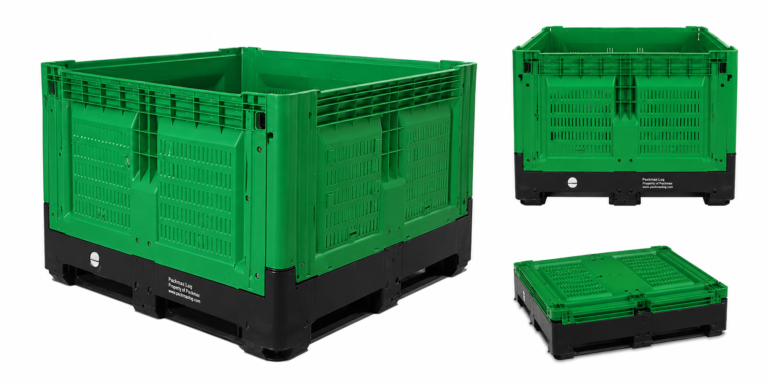
Collapsible pallet boxes are especially useful when empty container return cost matters. After unloading, the side walls can be folded down to reduce storage height, helping companies save warehouse space and return freight cost. This makes them a strong option for closed-loop logistics, distribution centers, export packaging, and high-volume supply chains.
For buyers in automotive, retail, e-commerce warehousing, and industrial supply, foldable pallet boxes make daily operations more flexible. They can carry bulk goods when open and save space when empty. If your business ships products between factories, warehouses, es and customers on a repeated route, collapsible pallet boxes are often a better long-term investment than fixed containers.
This type is suitable for:
Returnable packaging, automotive supply chains, retail distribution, warehouse storage, export logistics, parts transportation and high-volume material handling.
3. Vented Pallet Boxes for Agriculture and Fresh Produce
Vented pallet boxes are designed with ventilation holes on the side walls or panels, allowing air to circulate the goods. This structure is useful for fruits, vegetables, agricultural products, and other items that require airflow during harvesting, storage, or transportation.
For farms, produce exporters, cold storage facilities, and food distribution companies, ventilation helps reduce heat buildup and supports better product condition during handling. Vented pallet boxes are commonly used for apples, oranges, potatoes, onions, leafy vegetables, and other fresh produce. They can also be washed and reused, which is important for agricultural operations that handle seasonal volumes.
This type is suitable for:
Fruit and vegetable logistics, agriculture, farms, produce export, cold storage, food distribution and fresh produce collection.
4. Plastic Pallet Boxes with Drain for Wet or Washdown Applications
Some industries need containers that can handle moisture, liquid residue,e or frequent cleaning. Pallet boxes with drain outlets are useful when products may release water, melted ice,e or liquid during storage and transport. The drain feature helps simplify cleaning and reduce water accumulation inside the box.
These boxes are often chosen for fisheries, seafood processing, meat processing, poultry handling, food factories, es and wet industrial materials. They can also be used in facilities where containers must be washed after each use. For procurement teams working in food-related supply chains, drainage design is an important detail because it supports easier cleaning and daily sanitation.
This type is suitable for:
Seafood, fishery, meat processing, poultry, food factories, wet goods handling, washdown areas and cold chain logistics.
5. Heavy-Duty Pallet Boxes for Bulk Materials
For large-volume storage, heavy-duty plastic pallet boxes offer strong load support and efficient bulk handling. They are commonly used for raw materials, plastic parts, textiles, recycling materials, agricultural products,cts and industrial components.
In recycling and waste sorting industries, plastic pallet boxes can collect bottles, films, scraps, metal pieces, es or reusable materials. In textile and garment factories, they help move bulk fabric, finished goods, or production accessories. For general warehousing, they create a cleaner and more organized storage system than loose stacking or single-use cartons.
This type is suitable for:
Bulk storage, recycling, textiles, plastic parts, factory materials, industrial components, warehouse organization,n and material collection.
6. Food-Grade and Hygienic Pallet Boxes for Food Supply Chains
Food processing and ingredient storage require containers that are easy to clean and suitable for repeated handling. Plastic pallet boxes can support food factories, ingredient suppliers, bakeries, beverage plants, frozen food processors and agricultural packing centers.
For this industry, buyers should pay attention to material, surface finish, drainage, ventilation, cleaning method,ethod and whether the box design has areas where residue may collect. A smooth solid-wall pallet box may be preferred for dry ingredients or packaged food, while vented or drainable designs may be better for fresh produce, seafood or chilled goods.
This type is suitable for:
Food processing, ingredient storage, bakeries, beverage production, frozen food, agricultural packing and hygienic logistics.
7. How to Choose the Right Pallet Box
Before purchasing, procurement teams should first understand the actual use environment. If the box will be used for heavy industrial parts, strength and stacking stability should come first. If it will be used for fresh produce, ventilation and cleaning convenience are more important. If return transport cost is a major issue, collapsible pallet boxes may bring better savings over time.
Key factors to compare include:
Load capacity, internal volume, wall structure, forklift entry, stackability, collapsible design, ventilation, drainage, material grade, cleaning method, color options and branding requirements.
It is also important to consider whether the pallet box will be used indoors, outdoors, in cold storage, in export shipping, or in a closed-loop system. A good supplier should help match the box structure to your product weight, handling equipment, storage method, and target industry.
Conclusion
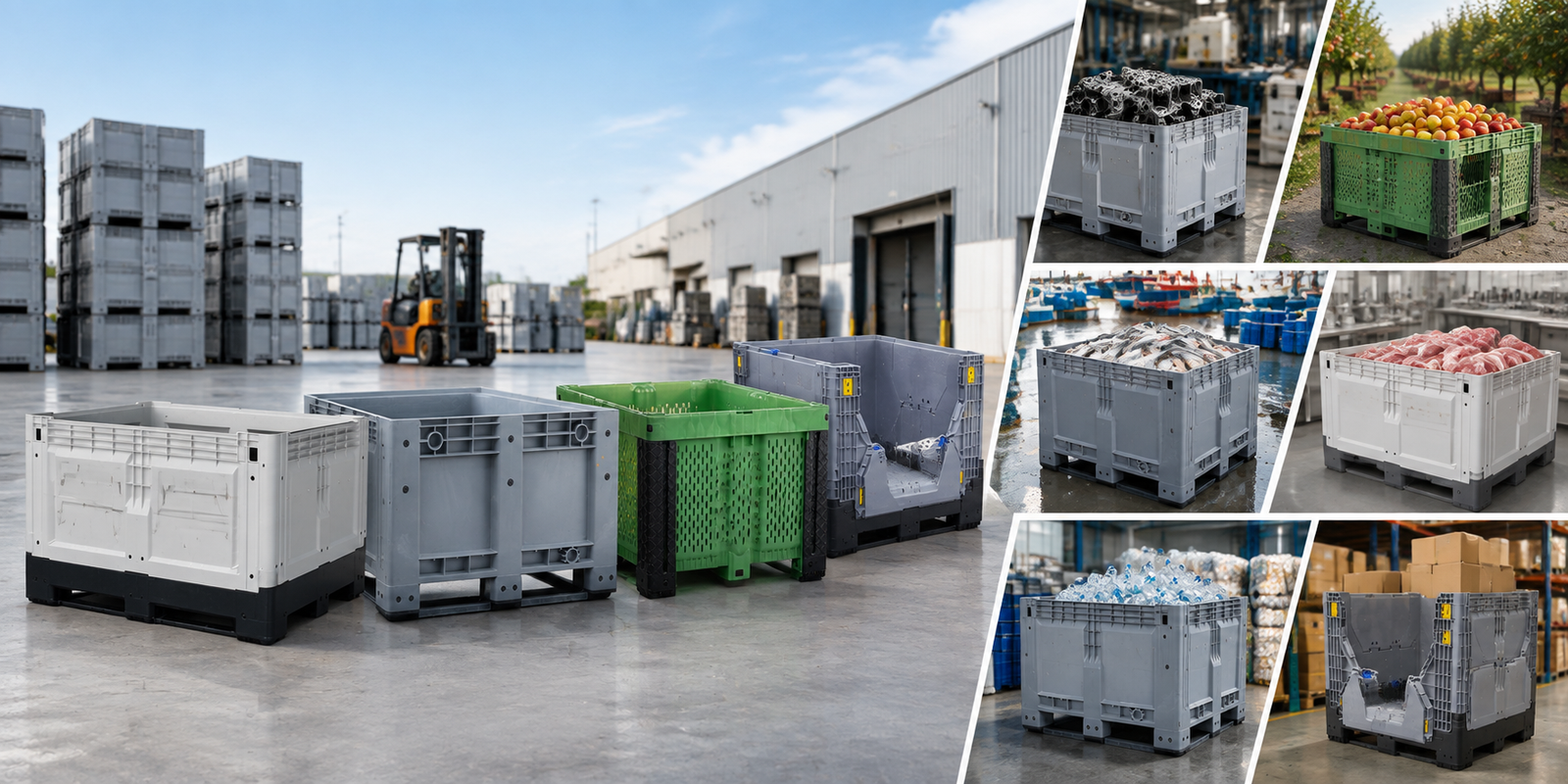
There is no single pallet box that fits every industry. Solid-wall pallet boxes are reliable for industrial storage, collapsible pallet boxes are ideal for returnable logistics, vented pallet boxes support fresh produce handling, and drainable pallet boxes are useful for seafood, food processing and wet applications.
For B2B buyers, the best choice depends on product type, load requirement, transport route, cleaning needs and warehouse space. By selecting the right plastic pallet box for your industry, companies can improve handling efficiency, protect goods during transport and build a more reusable packaging system for long-term operations.