

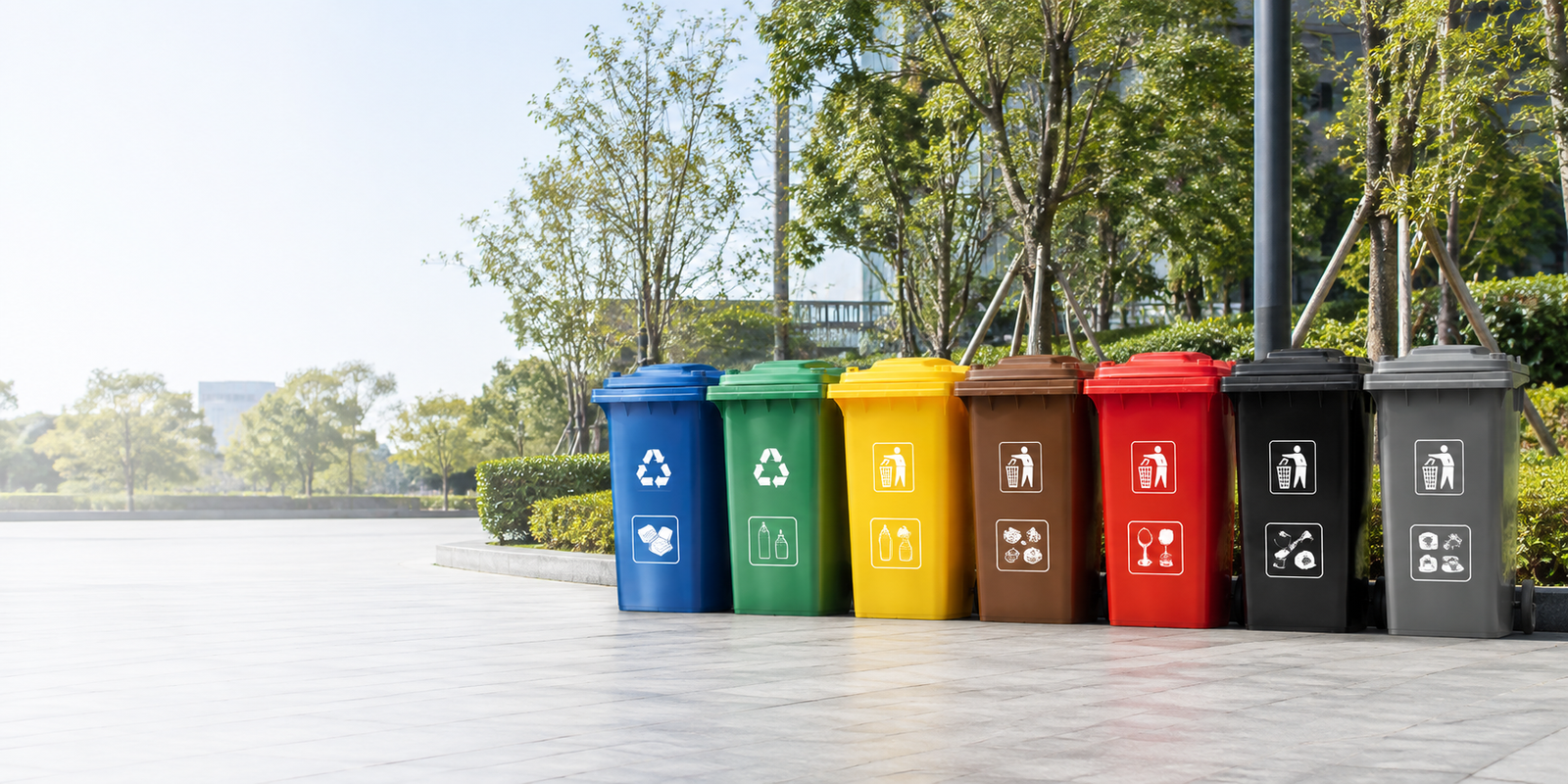
Color-coded trash cans make waste sorting easier in homes, offices, schools, hospitals, shopping centers, and public spaces. They help people quickly identify where to place recyclables, food waste, general trash, and hazardous materials.
However, trash can colors are not universal. A blue bin may mean mixed recycling in one city but paper only in another. Always check local waste-management rules and bin labels before disposing of waste.
Why Are Trash Can Colors Important?
Different bin colors help organizations:
- Improve recycling rates
- Reduce contamination
- Make waste sorting easier
- Support sustainability goals
- Simplify staff and public training
- Keep facilities cleaner and more organized
A clear color-coding system can make recycling faster and more effective.
Common Trash Can Colors and Their Meanings
Blue Bins: Paper and Recycling
Blue bins are commonly used for paper, cardboard, magazines, newspapers, and office waste. In some locations, they also accept plastic bottles, metal cans, and other recyclable containers.
Green Bins: General or Organic Waste
Green bins may be used for non-recyclable general waste or for organic waste, depending on the local collection system. They can contain food scraps, leaves, grass, garden waste, or mixed household waste.
Yellow Bins: Plastics and Packaging
Yellow bins are often used for plastic bottles, containers, packaging, aluminum cans, and lightweight recyclable materials. They are common in public recycling areas and commercial facilities.
Red Bins: Hazardous or Medical Waste
Red bins are generally used for hazardous waste, medical waste, chemicals, sharps, batteries, or contaminated materials. They are often found in hospitals, clinics, laboratories, and industrial facilities.
Brown Bins: Food and Garden Waste
Brown bins are commonly used for organic materials. They may contain food scraps, fruit and vegetable peels, coffee grounds, leaves, grass clippings, and garden waste.
Black or Gray Bins: General Waste
Black and gray bins are usually intended for non-recyclable waste. This may include used tissues, hygiene products, contaminated packaging, and other materials that cannot be recycled or composted.
Purple Bins: Glass Recycling
Purple bins may be used for glass bottles, jars, and containers. In some regions, glass may be collected in another color bin, so local guidance should always be followed.
White Bins: E-Waste and Special Waste
White bins are often used for batteries, mobile phones, chargers, small electronic devices, cables, and other e-waste. These materials should not be mixed with general household waste.
Trash Can Colors Around the World
Color systems differ between countries and cities. In the United States and Canada, blue is often used for recycling, while green, black, or gray may be used for general waste. In many European countries, blue is associated with paper, yellow with packaging, brown with organic waste, and green or gray with general waste.
In the United Kingdom and Australia, local councils may use different color combinations for recycling, food waste, garden waste, and residual waste. For this reason, labels and local regulations are more important than color alone.
Choosing the Right Color-Coded Trash Cans
Businesses, municipalities, schools, and institutions should select bins based on local waste rules, waste volume, location, and user needs.
Multi-compartment recycling bins are ideal for offices, malls, airports, schools, and hospitals because they allow users to separate paper, plastic, glass, and general waste in one location. Outdoor bins should be durable, weather-resistant, and clearly labeled.
Custom colors, logos, labels, and recycling symbols can make waste sorting easier while supporting a company’s brand and sustainability goals.
Conclusion
Color-coded trash cans are an effective way to improve waste separation and recycling. Although bin colors may vary by country and municipality, a clear system with easy-to-read labels can reduce confusion and help create a cleaner, more sustainable environment.